Why don't airlines board planes the optimal way?
The mathematically optimal boarding method has existed since 2008. We rebuilt the classic studies in JuPedSim to see why it stays on paper.
June 12, 2026 · Dr. Habil. Mohcine Chraibi · first published on LinkedInIn 2008, astrophysicist Jason Steffen worked out the mathematically optimal way to board an airplane. It boards passengers in a precise interleaved order — window seats first, every other row — so that many people stow their luggage at the same time and nobody ever has to climb over a seated neighbor. In ideal conditions it’s dramatically faster than how airlines actually do it. A counter-intuitive part of the result is that boarding back-to-front, which many airlines use, is no better than boarding everyone at random, and front-to-back is worse than random.
No airline uses Steffen’s method. We rebuilt these studies in JuPedSim, our open-source pedestrian-dynamics simulator, to look at why.
Step 1 — reproduce the classic ranking
We modelled a single-aisle 180-seat cabin and ran six boarding strategies. Each passenger walks the aisle to their row, holds there while they stow luggage and let neighbors shuffle past (the two things that actually cause boarding delays), then sits. Same geometry, same luggage draws, 20 repetitions per method.
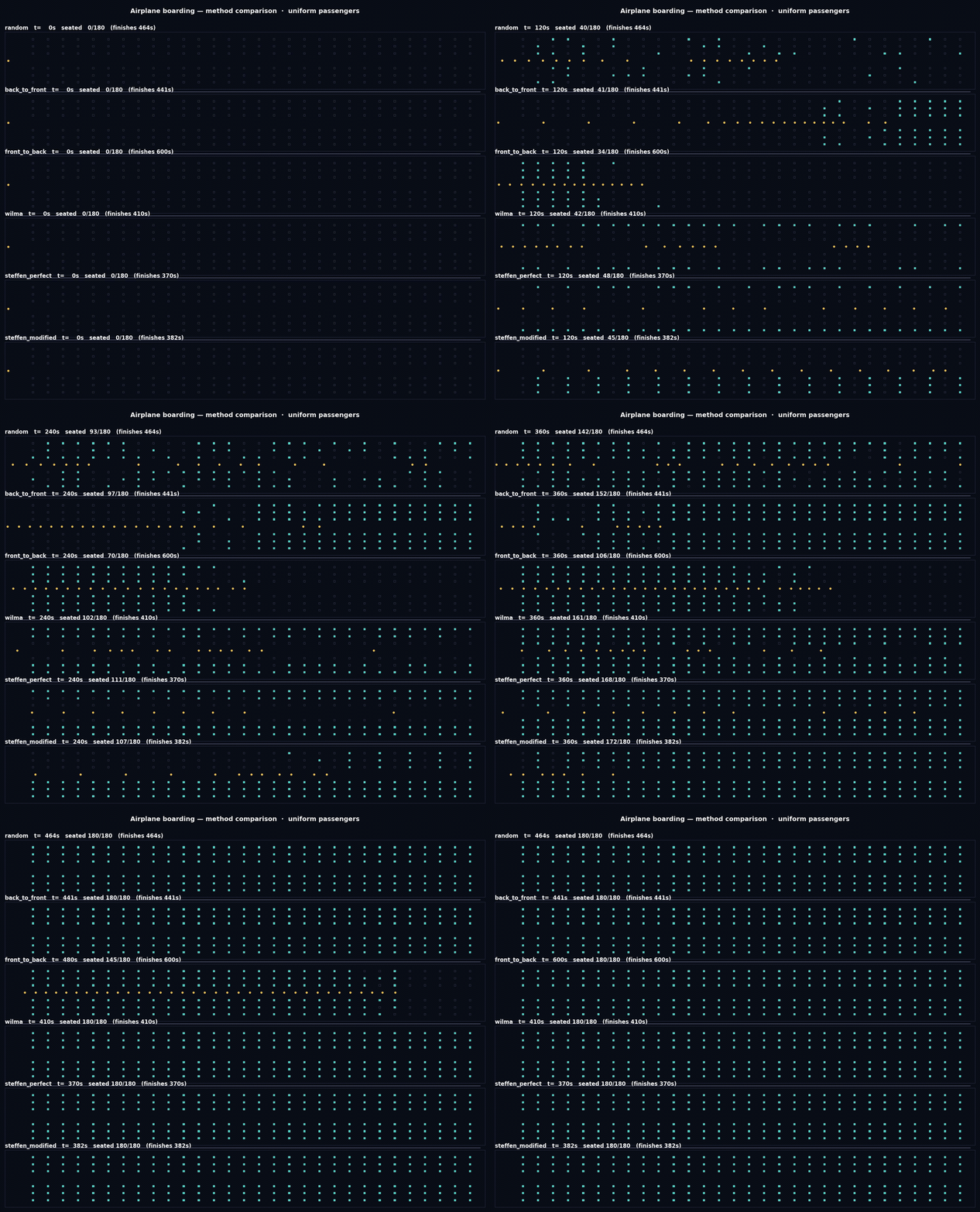
The ranking comes out as in the literature: Steffen fastest, back-to-front barely better than random, front-to-back worst.
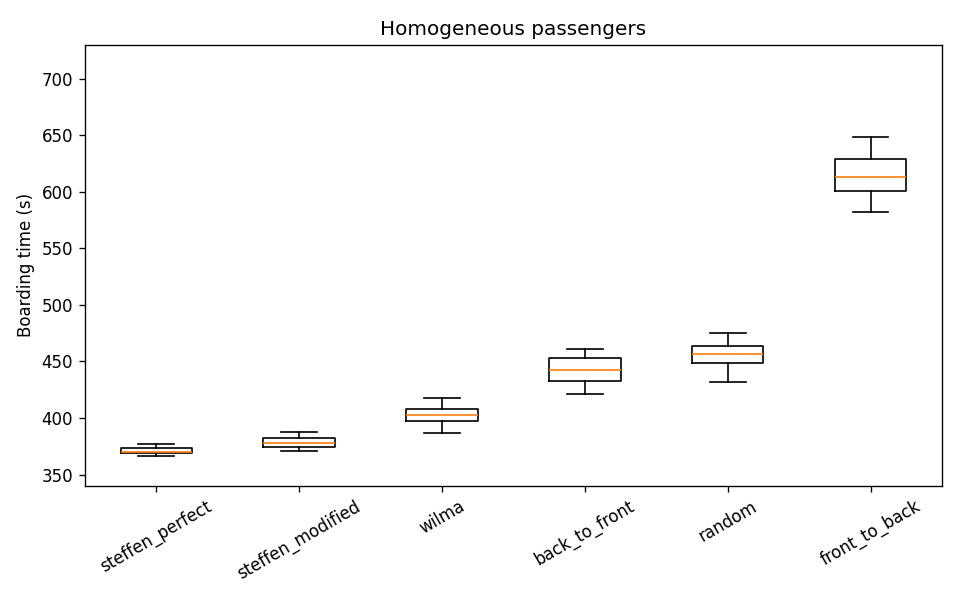
This reproduces established results. The next question is the one that matters in practice.
Step 2 — why the optimum stays on paper
Steffen’s method assumes 180 strangers will form one perfect single-file queue and board in a strict choreographed order. Real passengers don’t. Families board together. People show up late. Not everyone follows the plan.
A very recent paper — Dong, Yanagisawa & Nishinari (2025), Physica A, on boarding the future blended-wing-body aircraft — quantified one of these effects: a compliance rate, the share of passengers who board in their assigned slot. We reproduced their compliance sweep on our single-aisle cabin.
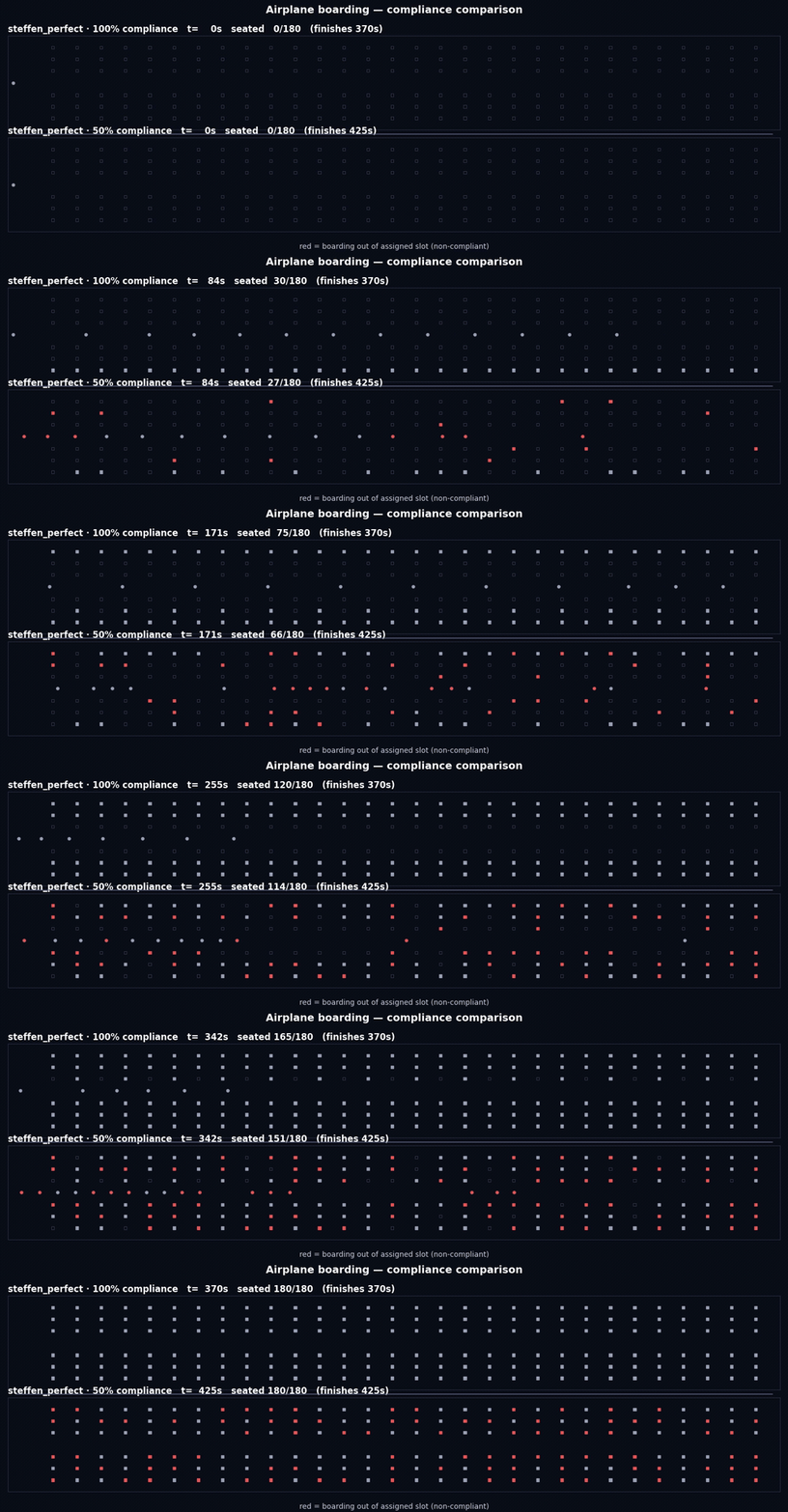
The result matches their paper: as compliance drops, the optimized methods lose their advantage and move toward random boarding, while random itself barely changes. At zero compliance every method gives the same time, because there is no longer any order to follow.
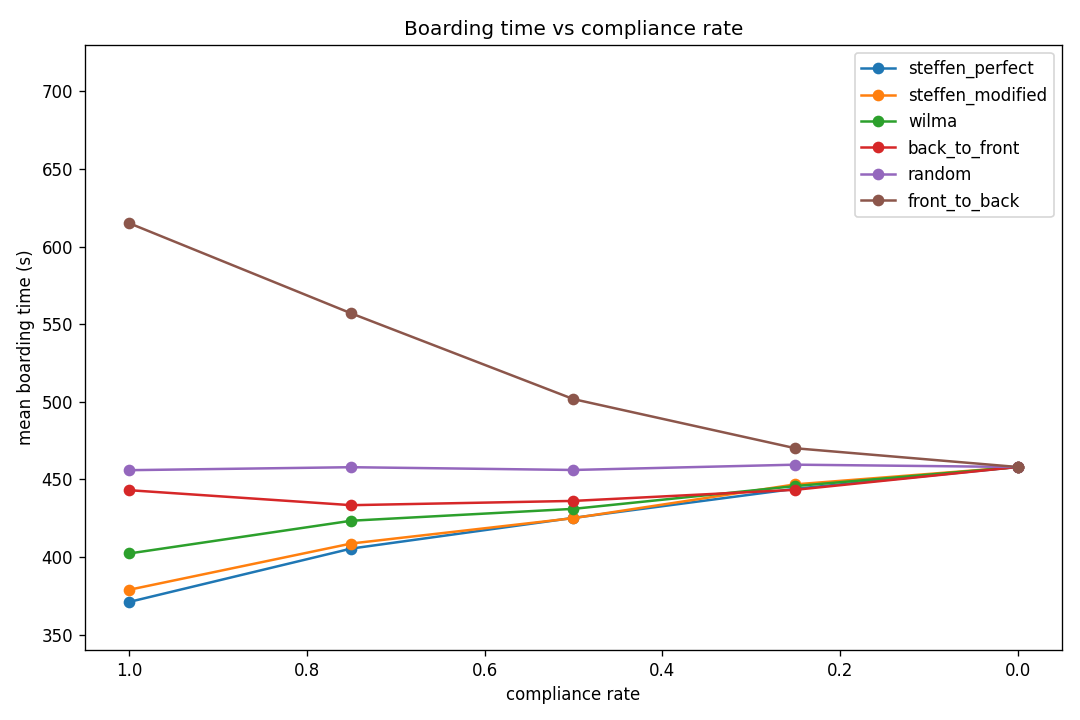
Two completely different models — their discrete cellular automaton on a wide multi-aisle aircraft, our continuous pedestrian simulation on a narrow-body — agree on the trend.
Step 3 — the optimum is the fragile one
We pushed the same idea two more ways. We gave passengers realistic profiles (fast young travelers, heavy luggage, elderly with reduced mobility, families with kids), and we let travel groups board together instead of in perfect order.
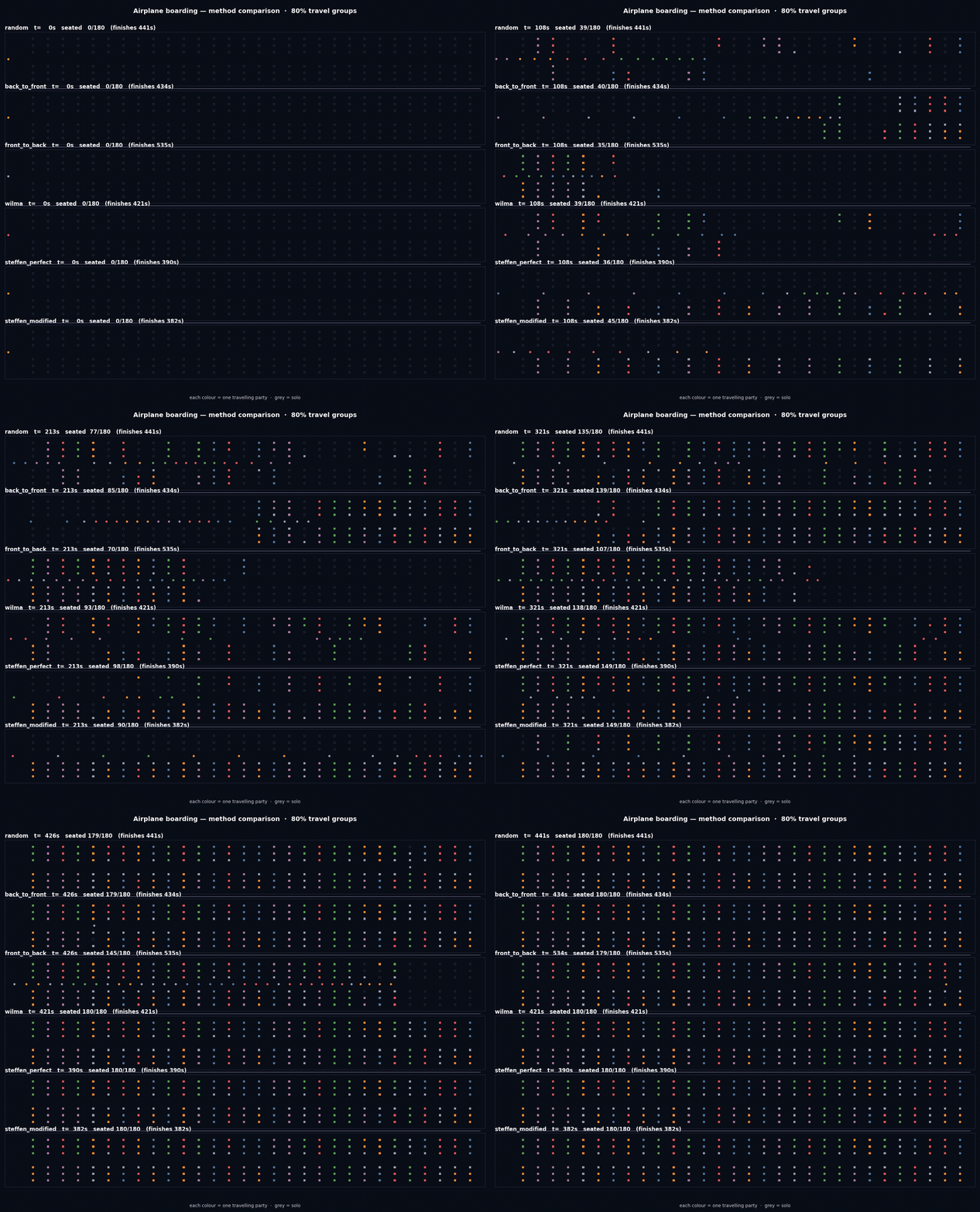
In each case, Steffen’s “perfect” method is the most fragile. It is the most sensitive to a mixed passenger crowd, it is the only method that gets slower as more people travel in groups, and it loses its advantage when people do not comply. A coarser, more practical Steffen-style variant, which real passengers could plausibly follow, stays robust and overtakes the optimum.
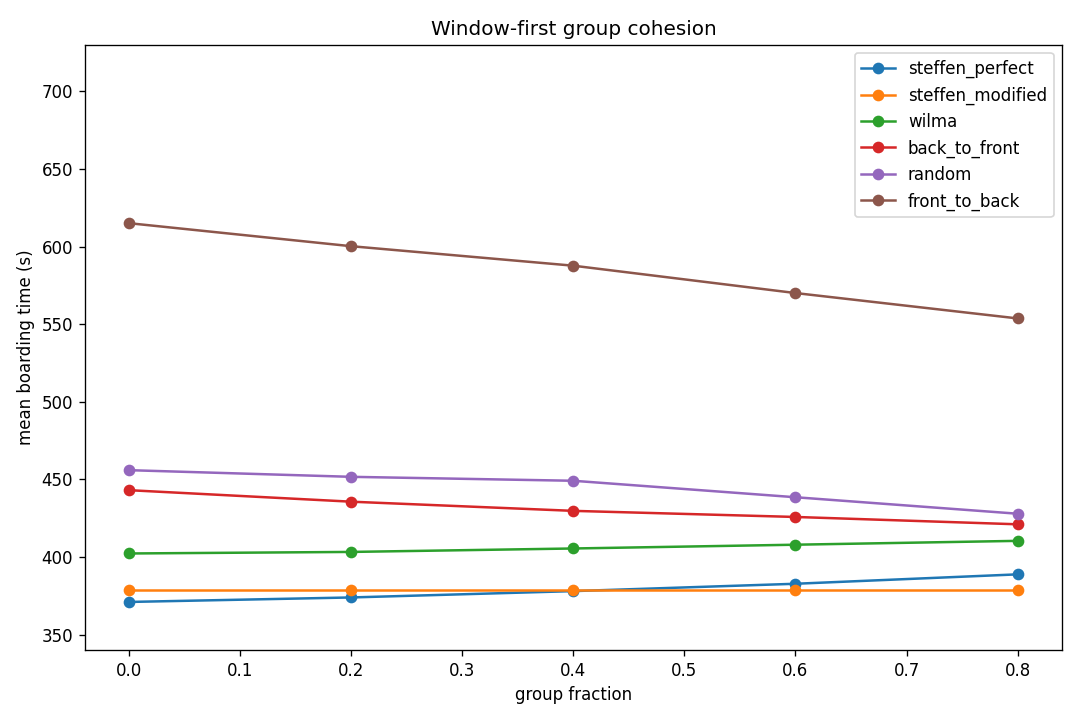
The practical takeaway is that the benefit of an optimized boarding order depends almost entirely on passengers following it.
Code and credits
Steffen showed the ranking in 2008 and confirmed it experimentally in 2012; Dong et al. did the robustness analysis in 2025. What we built is a reproduction: it shows that JuPedSim can model the problem, that the results hold across different simulation engines, and that the full pipeline is open and re-runnable.
Everything here — model, experiments, figures, and videos — is on GitHub, and each result regenerates with one command:
Code, high-quality videos & data: github.com/chraibi/boarding JuPedSim: www.jupedsim.org · WebJuPedSim: app.jupedsim.org